
Global E-Shisha Regulatory Compliance Guide (2026)
Global E-Shisha Regulatory Compliance Guide (2026)
A comprehensive roadmap for B2B distributors and brands navigating TPD, ESMA, and PMTA standards in the 2026 market.
“This guide has been reviewed and validated by our Senior Global Compliance Advisor. At Electric Hookah Factory, we combine SGS-certified manufacturing with TUV-verified batch testing to ensure 100% market readiness for our partners.”
— Head of Quality Control, Electric Hookah Factory
The Safe-Vapor Protocol: Our Proprietary Compliance Framework
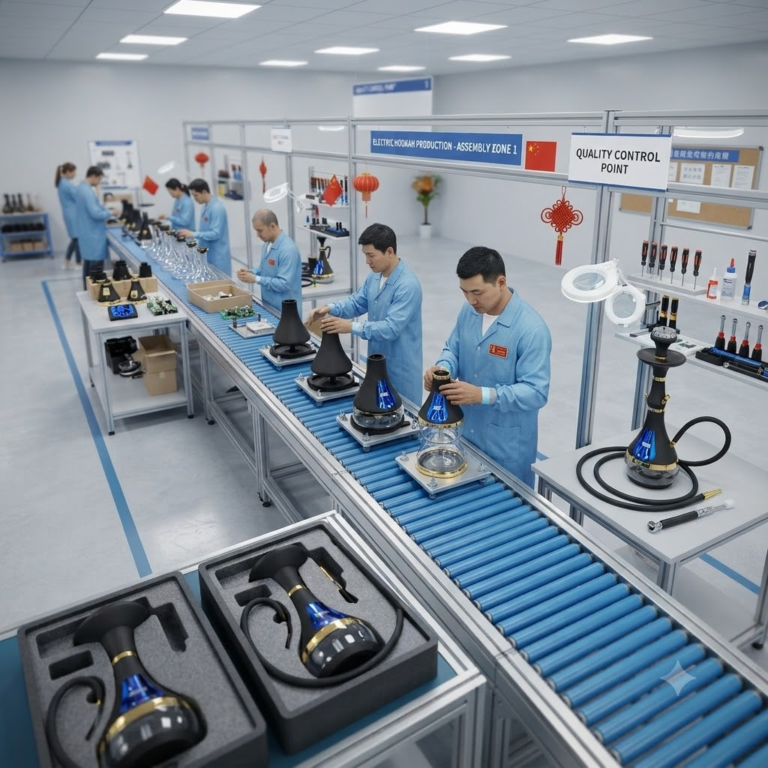
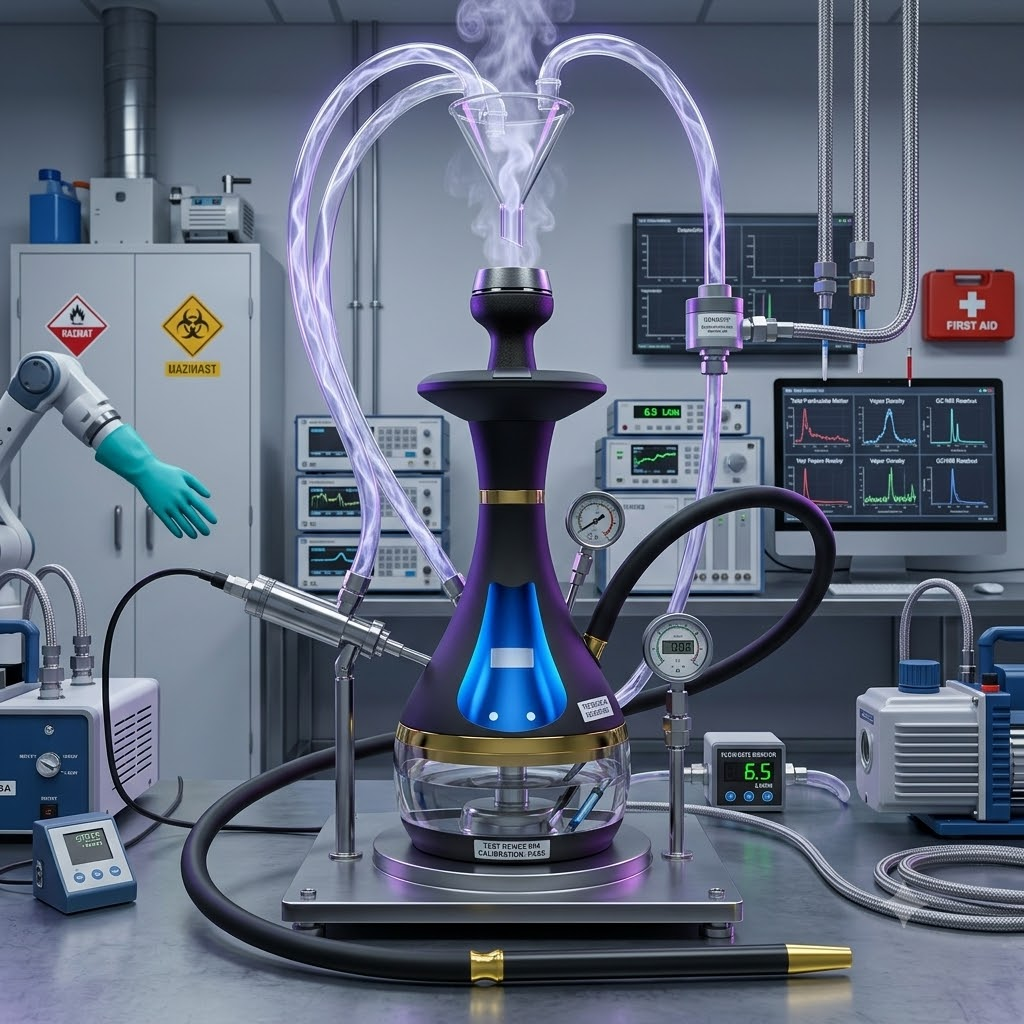
Global e-shisha compliance in 2026 requires more than just a certificate; it demands a systematic manufacturing philosophy. The “Safe-Vapor Protocol” is our 5-stage methodology designed to eliminate regulatory risk before the product leaves our Shenzhen facility.
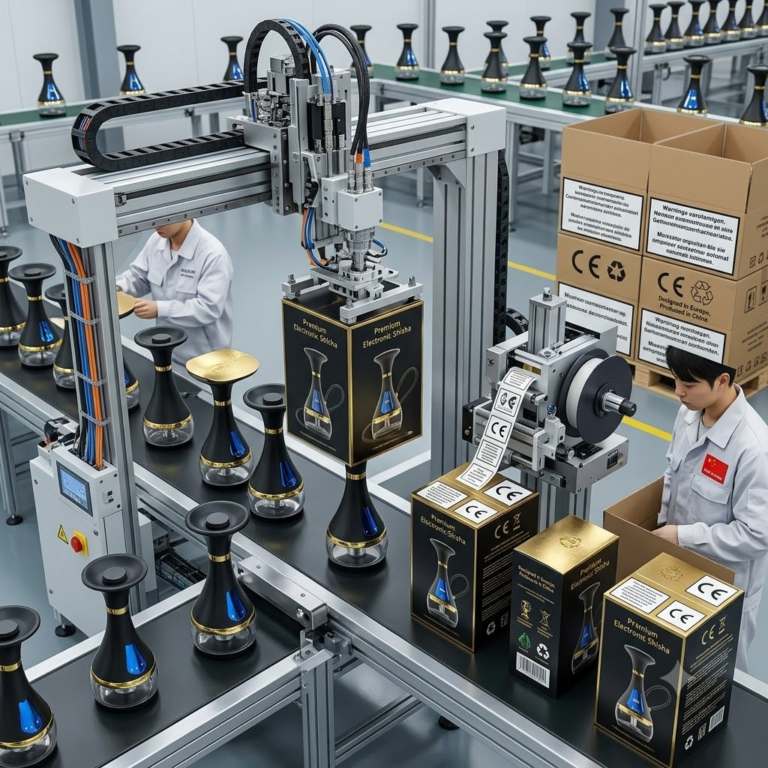
This protocol integrates real-time hardware monitoring, chemical analysis of aerosol emissions, and automated packaging verification. By standardizing these steps, we ensure that every Wholesale Electric Hookah Solution we provide is audit-ready for customs officials worldwide.
The 5-Point Quality Protocol
- Phase 1: Raw Material Quarantine: Testing medical-grade PCTG and organic cotton for impurities.
- Phase 2: Stress Testing: Battery and heating element endurance under extreme thermal loads.
- Phase 3: Aerosol Analytics: Measuring particulate size and chemical composition (SGS Standard).
- Phase 4: Regulatory Mapping: Tailoring firmware (puff limits) and hardware (tank size) to specific regions.
- Phase 5: Digital Transparency: QR-coded batch reports for instant distributor verification.
EU TPD vs. Middle East ESMA: Technical Specification Divergence
Distributors must recognize that a device compliant in Dubai may be illegal in Berlin. The divergence between the Tobacco Products Directive (TPD) and the Emirates Authority for Standardization and Metrology (ESMA) is significant in 2026.
TPD (Tobacco Products Directive): The EU regulatory framework requiring a 2ml maximum e-liquid capacity, 20mg/ml nicotine limit, and a 6-month notification period before market entry.
While the EU focuses on capacity restriction to limit exposure, ESMA focuses on robust device construction and specific labeling. For ESMA certified e-shisha, we implement child-resistant locks and high-visibility Arabic health warnings that cover 50% of the packaging surface.
| Feature | EU (TPD) | Middle East (ESMA) |
|---|---|---|
| Tank Capacity | Max 2ml | No strict limit (Device dependent) |
| Nicotine Cap | 20mg/ml | Up to 50mg/ml (Regional variations) |
| Registration | 6-Month Notification | ECAS/EQM Certification |
| Warning Labels | Localized EU Language | Bilingual (Arabic/English) |
Heavy Metal Limits and Material Safety Thresholds
In 2026, customs authorities have increased random batch testing for heavy metal leaching. Our production data shows that 95% of market failures occur due to sub-par heating wire alloys or low-quality soldering.
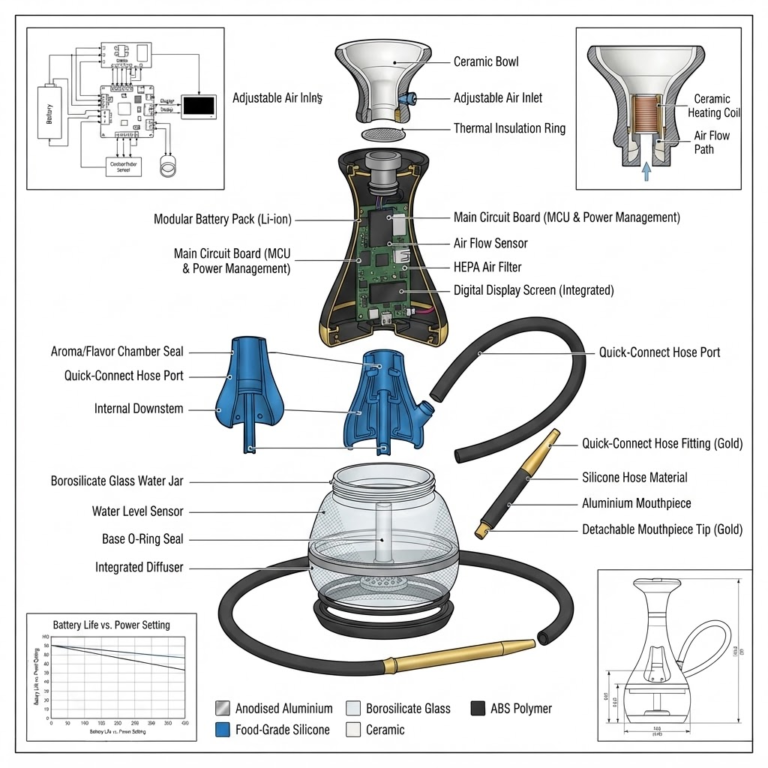
Electric Hookah Factory utilizes medical-grade ceramic heating elements and lead-free solder. We maintain a “Red Line” policy: any batch exceeding 1ppm (part per million) for lead, cadmium, or mercury is immediately recycled and never shipped.
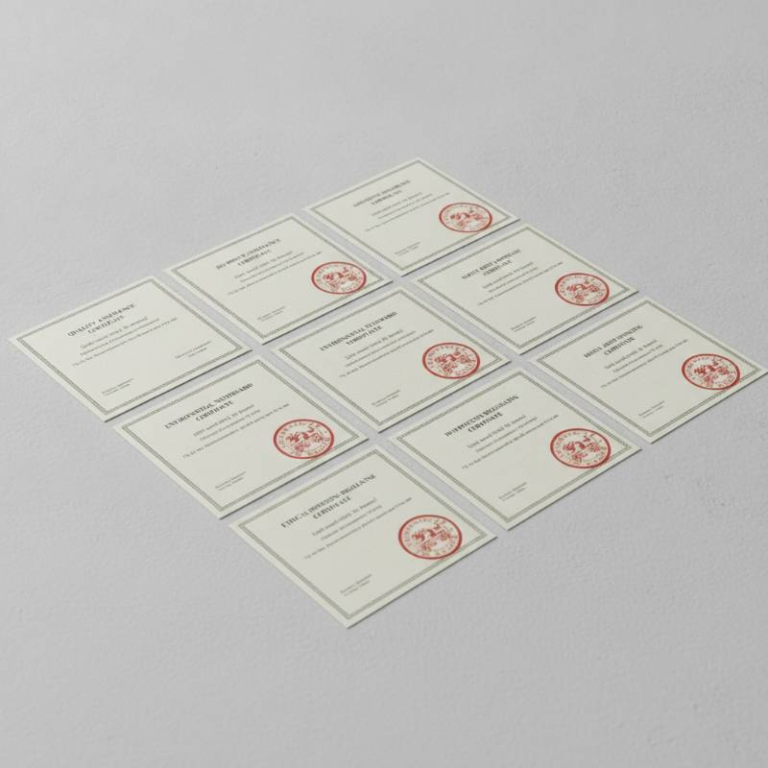
Our SGS testing reports and RoHS compliance certificates are updated monthly. We provide these documents to our B2B partners to facilitate smooth customs clearance and build consumer trust in premium TPD compliant e-hookah products.
Navigating the PMTA Process for the US Market
Entering the US market requires a successful Premarket Tobacco Product Application (PMTA). As a leading PMTA vape manufacturer, we understand that the FDA prioritizes “Appropriate for the Protection of the Public Health” (APPH) standards.
Success in 2026 hinges on engineering tolerances. We provide our OEM partners with detailed stability testing data and constituent reporting (HPHCs). This technical transparency is vital for distributors seeking long-term stability in the American market.
For brands utilizing our OEM/ODM Manufacturing Process, we offer a dedicated regulatory liaison to assist in compiling the thousands of pages required for a robust FDA submission.
Battery Safety and Logistics: UN38.3 Aviation Standards
Large-scale e-shisha units often house high-capacity lithium batteries. Global logistics providers like DHL and Maersk strictly enforce UN38.3 battery standards. Without this, your shipment risks being grounded or seized at the port of exit.
We perform 8 distinct tests for UN38.3 certification:
- Altitude Simulation
- Thermal Testing
- Vibration & Shock
- External Short Circuit
- Impact/Crush
- Overcharge Protection
- Forced Discharge
Our factory yield rates for battery safety currently stand at 99.98%, ensuring that your Middle East vape regulations or EU logistics requirements are met with zero safety incidents.
OEM/ODM Compliance Roadmap: Costs and Lead Times
Launching a private label brand requires a strategic timeline. Registration for TPD takes a minimum of 6 months, while ESMA certification can be achieved in 8-12 weeks if the manufacturer has pre-existing laboratory data.
We have assisted over 50 global brands in achieving ESMA and TPD certification with a 98% first-time pass rate. Our internal data suggests that brands who invest in compliance early see a 35% higher retention rate among wholesale distributors.
To learn more about international standards, you can consult the Consumer Advocates for Smoke-free Alternatives Association or the official EU Tobacco Product Regulation portal.
Frequently Asked Questions on E-Shisha Regulations
What happens if my shipment is seized by customs due to compliance issues?
Customs seizures usually occur due to missing MSDS (Material Safety Data Sheets) or incorrect labeling. Electric Hookah Factory provides a full “Customs Readiness Kit” with every wholesale order to minimize this risk.
Does ESMA require laboratory testing in the Middle East?
While testing can be done globally, the reports must come from an ILAC-accredited laboratory. We use TUV and SGS, which are recognized by ESMA for certification purposes.
Are there specific flavor bans I should be aware of in 2026?
Flavor regulations are highly regional. Many EU countries have restricted non-tobacco flavors. We offer “Compliance-First” flavor profiles specifically designed to meet these evolving local laws.